A template for many on-the-road small cities and towns in Texas and Oklahoma is a courthouse and town square, a largely-vacant downtown that provides a look-back to more prosperous times, and a smattering of franchise convenience stores and fast food on its outskirts. Often, these cities and towns were settled along major rivers in the area, or later along railroad lines.
Beeville, Texas, is a prototype of these small rural communities, with a particular strategy of recent economic survival. Originally settled in 1830 on the Poesta Creek, Beeville was later subsumed into the Republic of Texas and annexed into the United States (along with Texas) in 1859. The Southern Pacific Transportation Company built the first railroad in Beeville in 1886.
Fun fact: Despite bee sculptures throughout the town, Beeville is actually not named for anything to do with bees, but rather honors Bernard E. Bee, Sr., who held numerous local political offices including Secretary of War and Secretary of State for the Republic of Texas.
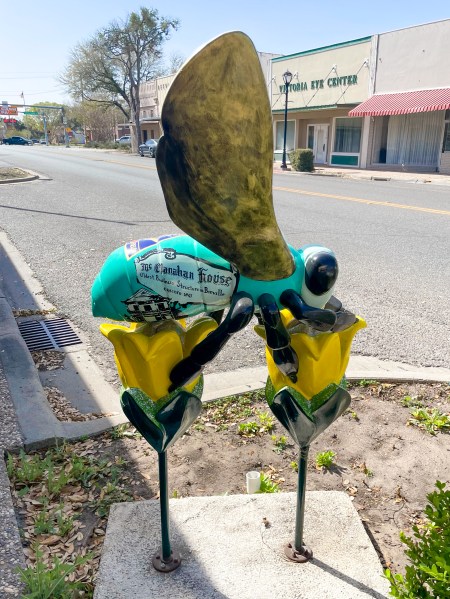
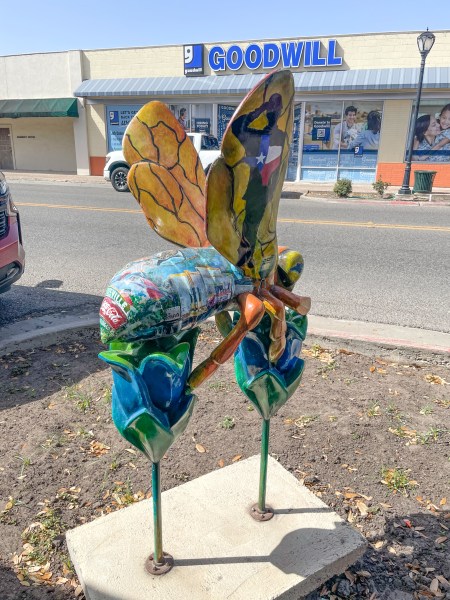
Bees in Downtown Beeville
Beeville sits midway between Corpus Christi and San Antonio and has a current population of approximately 13,700. Almost three-quarters of the population identify as Hispanic or Latino. The town enjoys a number of public assets: the Beeville Art Museum, an impressive County library, County offices and Courthouse, a college, and numerous public parks.
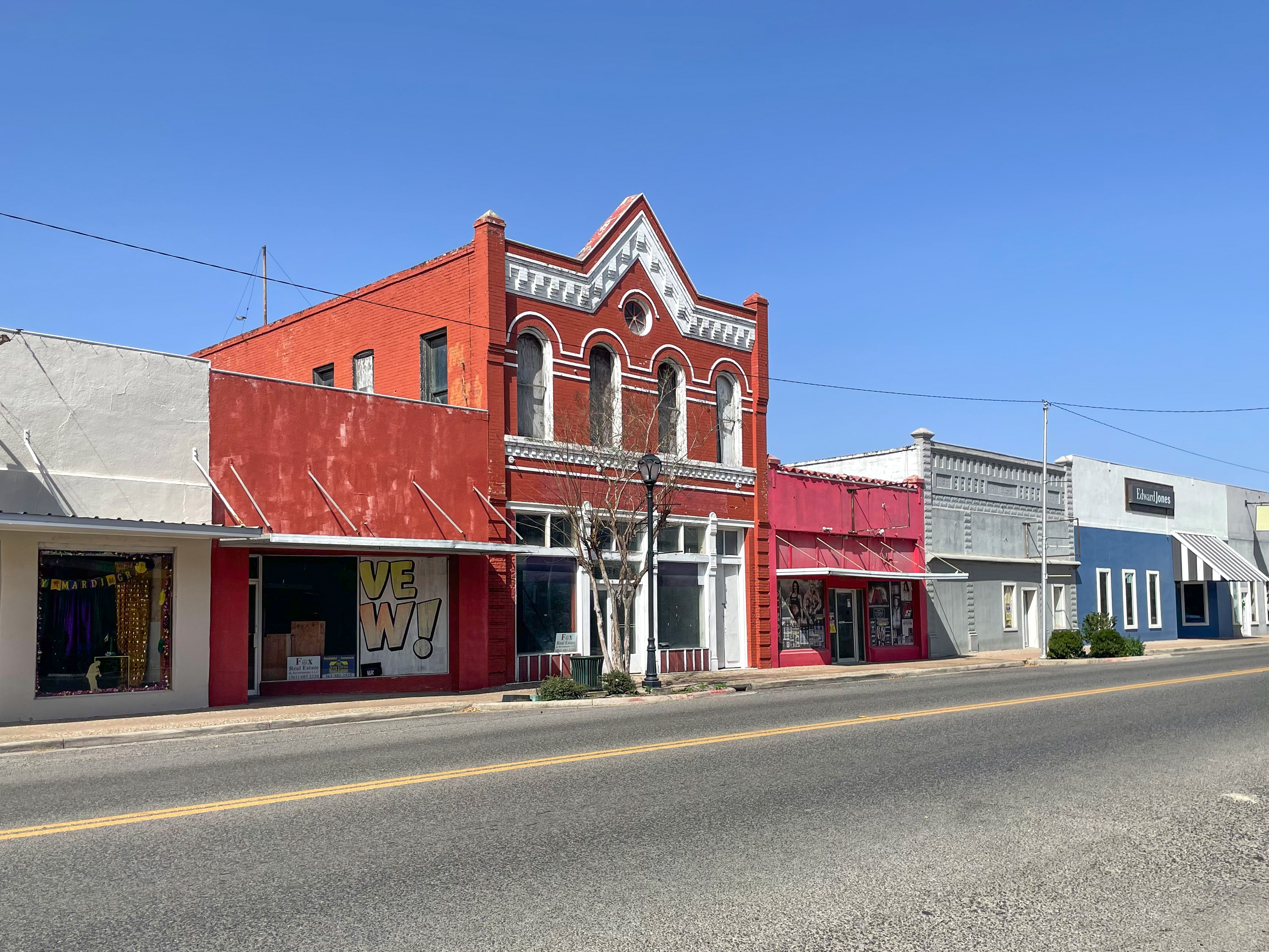
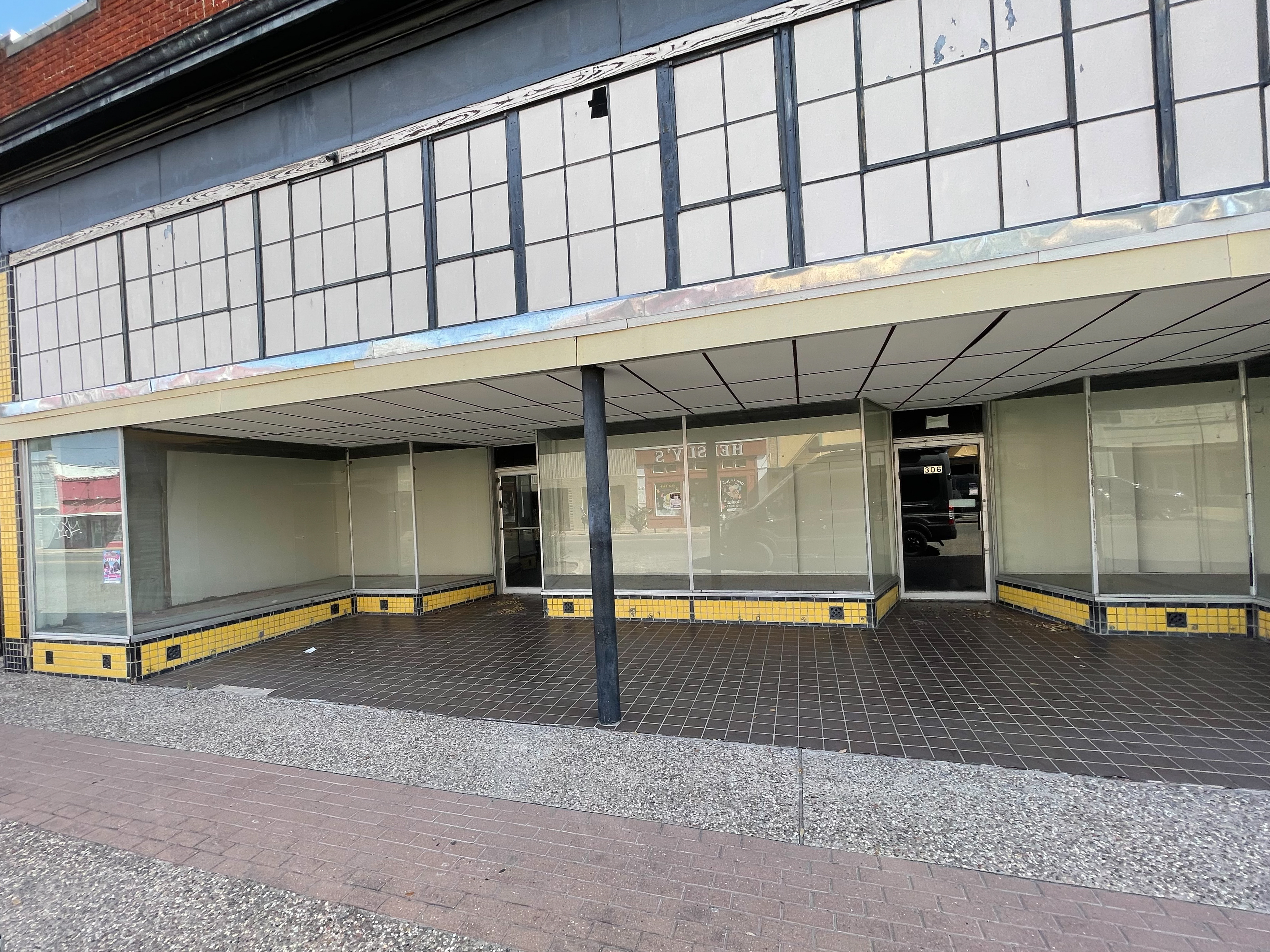
However, the signs of economic distress are obvious. Downtown storefronts are largely vacant. The closed Beeville theater displays posters of movies that were shown at the theatre in better times – Saturday Night Fever, Citizen Kane, Rear Window, and Frankenstein. The old art deco Coca Cola bottling plant, built in 1941 and closed in 1985, sits abandoned in the downtown.

In addition to the decline of the oil industry in the area, Beeville lost an important large asset when the Naval Airstation Chase Field closed in 1993 after operating continuously since 1952.
Beeville’s alternative was to build prisons. As described in Joseph Hallinan’s fine book, Going Up The River, Travels in a Prison Nation, Beeville aspired to be the prison capital of the world, attracting large inmate facilities, as well as what would become one of the largest corrections training centers in the country. (This Beeville prison history is also documented in an excellent 2008 Rutgers doctoral dissertation by Eric J. Williams.)
Hallinan describes the faustian bargain the community made to become a prison economy. Low-wage work at the prison was better than the alternative – sometimes luring teachers and police officers away from existing municipal work – but still not sufficient to escape a marginal existence. He tells the story of Bob Walk, a former judge, who opened a pawn shop in anticipation of the new prisons, knowing that corrections staff would not have sufficient incomes to get from one paycheck to the next. Indeed, Walk estimated that 30 percent of his subsequent business came from corrections officers trying to bridge the gap to the next paycheck.
Alas, the boom in prison expansion in Beeville came to an end in the 2000s, the result of sentencing changes and declining prison populations, extreme challenges in staffing facilities, and the diversion of more inmates into rehabilitation, mental health, and more appropriate settings. Garza East in Beeville was closed in 2020 as a result of downsizing and consolidation in the Texas Department of Corrections and reopened in 2024 as a transfer facility.
In our previous trips in the rural south, we have observed communities where a prison – often a private prison – was the sole local economic engine. We saw small towns with just a prison, a school, and one or two small churches.
Beeville illustrates something additional in stark terms: the attempted substitution of a local economy from military-industrial-complex to prison-industrial-complex. The local resilience and entrepreneurship that drove this transition is understandable and laudable, but the net result is troubling and dismaying. Prison economies are simply not a robust solution to the challenges of rural progress.


 Betsy and Eddie's Van Life